5 min to read
Map Writing Vol.1|一场快闪婚礼·牵挂的经纬
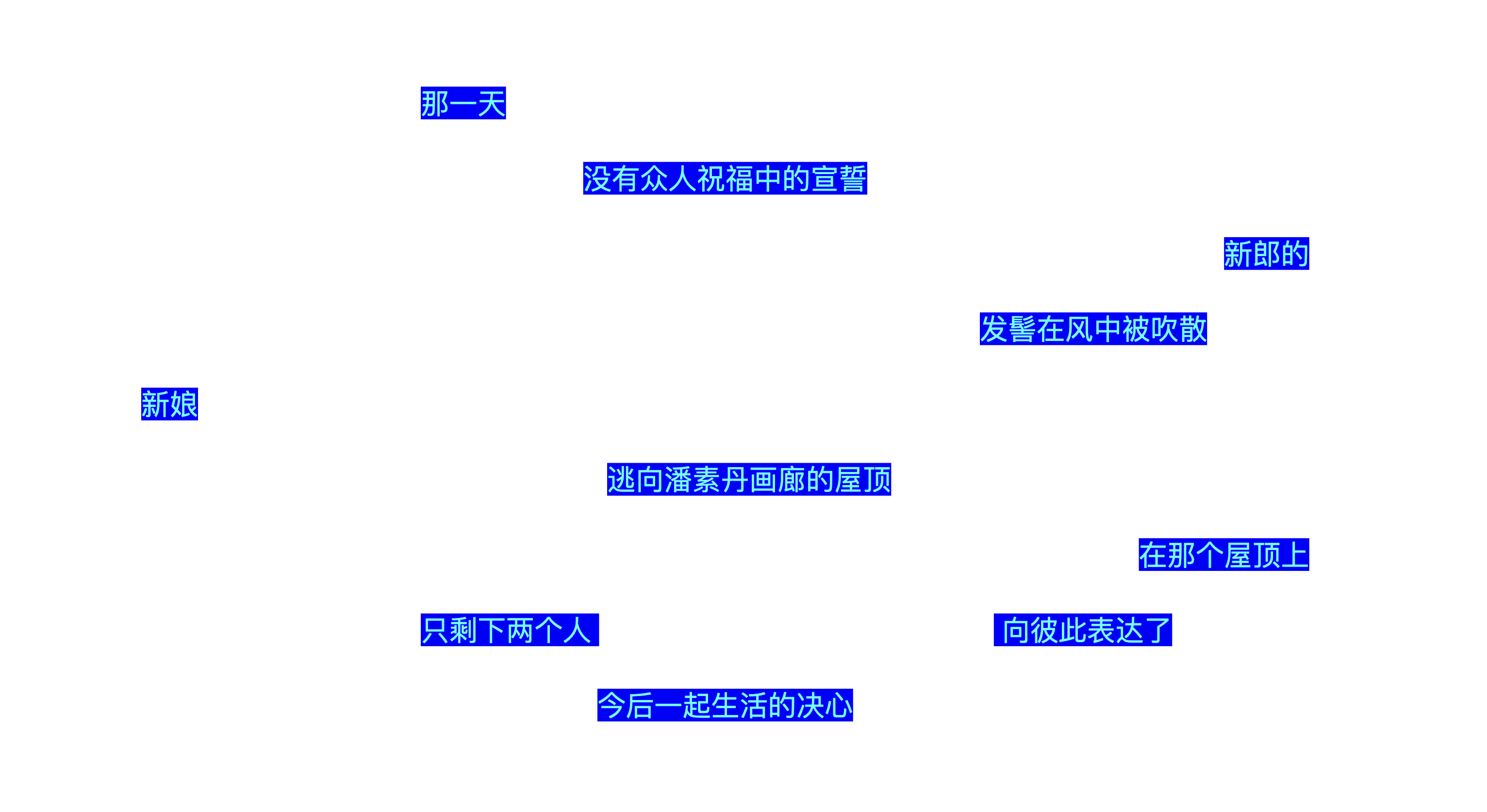
那一天,没有众人祝福中的宣誓,新郎的发髻在风中被吹散,他与新娘逃向潘素丹画廊的屋顶......
按语:对于从未踏足缅甸的人而言,“曼德勒”、“实皆”等名词第一次通过媒体进入人们的意识之中,是在3月28日,7.7级大地震发生时。一座座坍塌的佛像,轰然倒下的殖民时期的大桥,也伴随着这些陌生的地名孤立地出现在新闻报道里。但是它们在哪里,它们的周围又是怎么样的城市地景和山川河流?
今年的4月和5月,《交错带》的成员分别带了两期写作工作坊,和参与者一起打开卫星地图、街景地图,在虚拟地图上在缅甸旅行,找到那些在这场地震中戳中人心的名词或图像所对应的经纬度,去辨认那些无法返回的地方。或者在未能抵达之前,为能这些陌生的能指填充意义和具身的感受。
我们将部分作品选出,整理为专题连载陆续发布,以飨读者。
တႏွစ္ျပည့္ခဲ့တဲ့မဂၤလာေဆာင္ဟာ ဂုဏ္ပကာသနေတြမပါပဲၿပီးခဲ့တယ္။ တိတ္ေလးလာၿပီးေဆာင္လို႔ တိုးတိုးေလး ဝတ္စံုေပ်ာင္းလို႔ျပန္ခဲ့ရတယ္။ ေမာင့္က်က္သေရေခါင္းေပါင္းမပါဘူး… သတို႔သားဆံေကသာဟာေလမွာဝဲ.. သတို႔သမီးလည္း အေျပးအလႊား ပန္းဆိုးတန္းပန္းခ်ီျပခန္းေခါင္မိုးေပၚအထိေျပးတက္ခဲ့ရတယ္…. အဲဒီေခါင္မိုးေပၚကေန က်ေနာ္တို႔ႏွစ္ေယာက္အတူတကြေနထိုင္မႈကို အတိအလင္း ဖြင့္ဟခဲ့ၾကတယ္။ ခိုးေခ်ာင္ခိုးဝွက္ႀကီးျပင္းခဲ့ရတဲ့ သားေလးကေတာ့ ခုထိပဲ ခုထိပဲ ေဝးေနဦးမွာလား
“The wedding happened without any honor. We came quietly, held the ritual in silence, and left with our wedding clothes barely noticed.
There was no proud announcement, no celebratory parade…
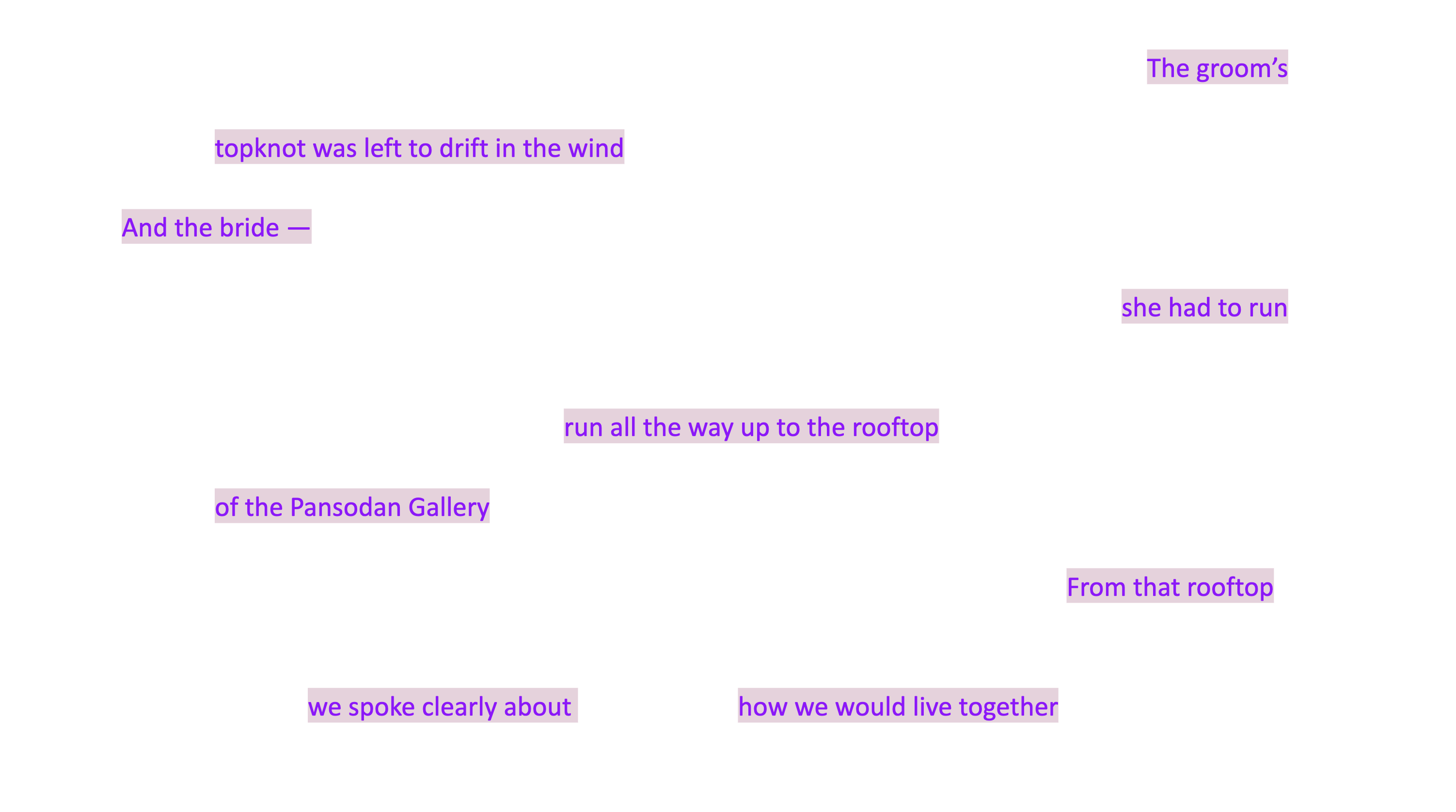
The groom’s topknot was left to drift in the wind…And the bride — she had to run, run all the way up to the rooftop of the Pansodan Gallery.
From that rooftop, we spoke clearly about how we would live together, just the two of us.
And our little son, who was born in secrecy and silence — will he remain apart like this, even now, even still?”
—— Written by Htet on the first anniversary of his wedding, 2016.3.27
2015年3月27日仰光的那场婚礼,被Htet戏称作“Flashmob Wedding”——警察闯进了他的婚礼现场抓捕他,人群四散。在那个记录婚礼的相册中,我看到了很多后来在泰缅边境上见到的人。他们都在2021年政变后流亡在那条国境线上。
那极具电影感的逃离婚礼的一幕,把我带去了那座城市的肌理之中。
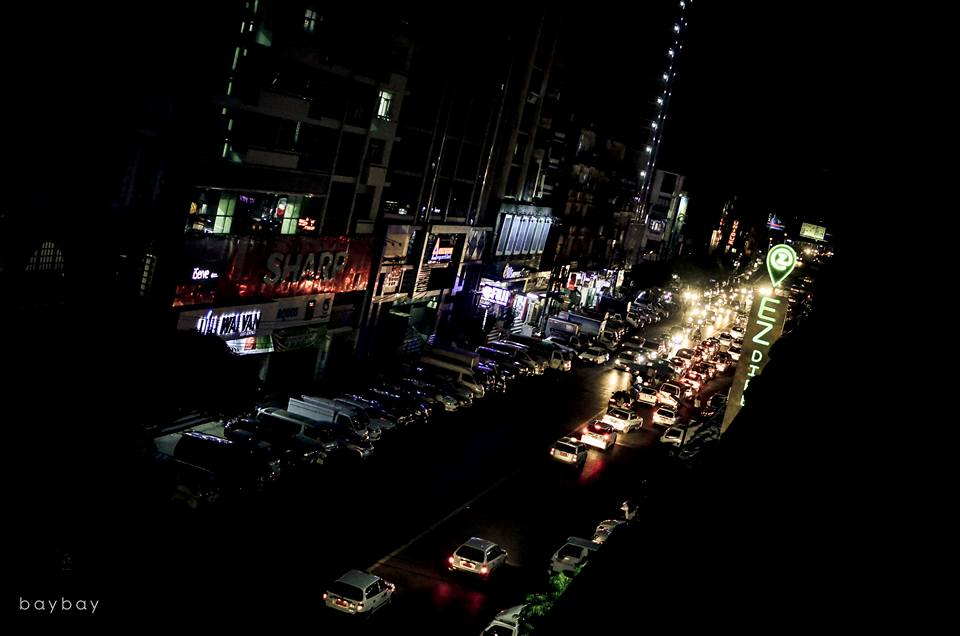
婚礼相册中的最后一张停留在这个街道,我在谷歌地图中通过夏普找到了对应的位置。
Htet jokingly called it a “Flashmob Wedding”—that day in Yangon, March 27, 2015, when police burst into the ceremony of his wedding to arrest him and the guests scattered in panic. Leafing through the wedding album years later, I recognized the faces of many who later reappeared along the Thai-Myanmar border. After the 2021 coup, they had all gone into exile along that fragile frontier.
That cinematic moment—of fleeing a wedding—struck me with particular force for how it lingered in geography:
The final photo in the wedding album lingers on this street; I located the corresponding spot on Google Maps through a Sharp storefront.
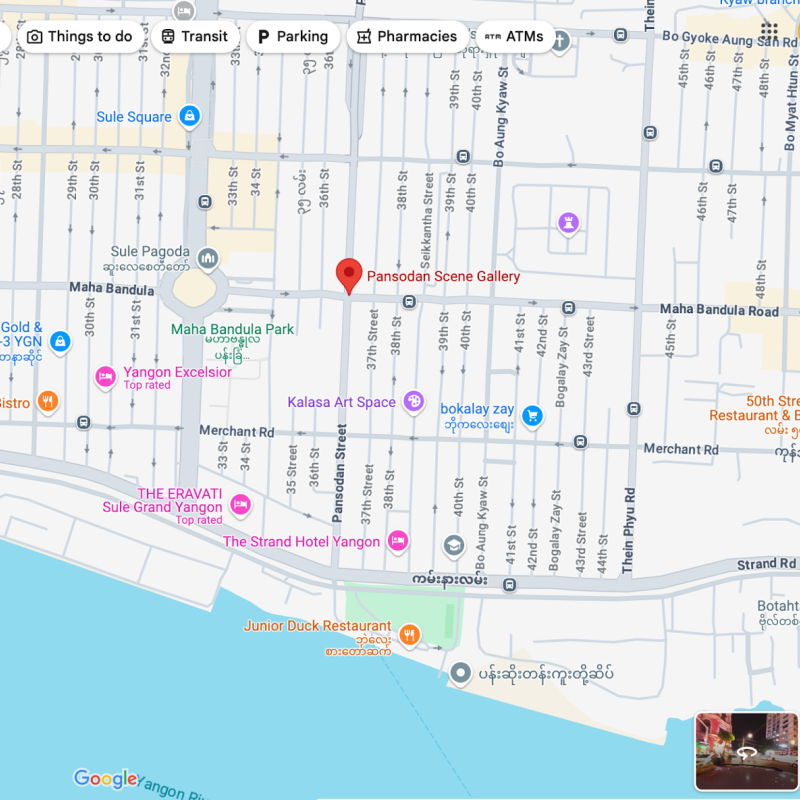
潘素丹大街,在36街和37街中间。事实上,在这条街上,以潘素丹为名的画廊有两间,一间叫Pansodan Art Gallery,另一间叫Pansodan Scene Gallery。根据婚礼现场的提示牌,更大的几率是Pansodan Scene。
我在谷歌地图上找到Pansodan Scene Gallery,它位于潘素丹大街和马哈班杜拉大街的交界处,紧邻苏雷佛塔。根据GPT,苏雷佛塔是仰光市规划的“零公里点”,也就是说,所有道路的起点都是从这座佛塔出发——一个几乎将佛塔嵌入城市地理与政治权力结构的规划设计。在这周围环绕着殖民时期的建筑、政府机关、法院、商圈、独立纪念碑。在1988年的8888民主运动、2007年的番红花革命、2021年反政变抗议中,苏雷佛塔都是民众集结游行的起点和象征场所。
再往南,就是仰光河。
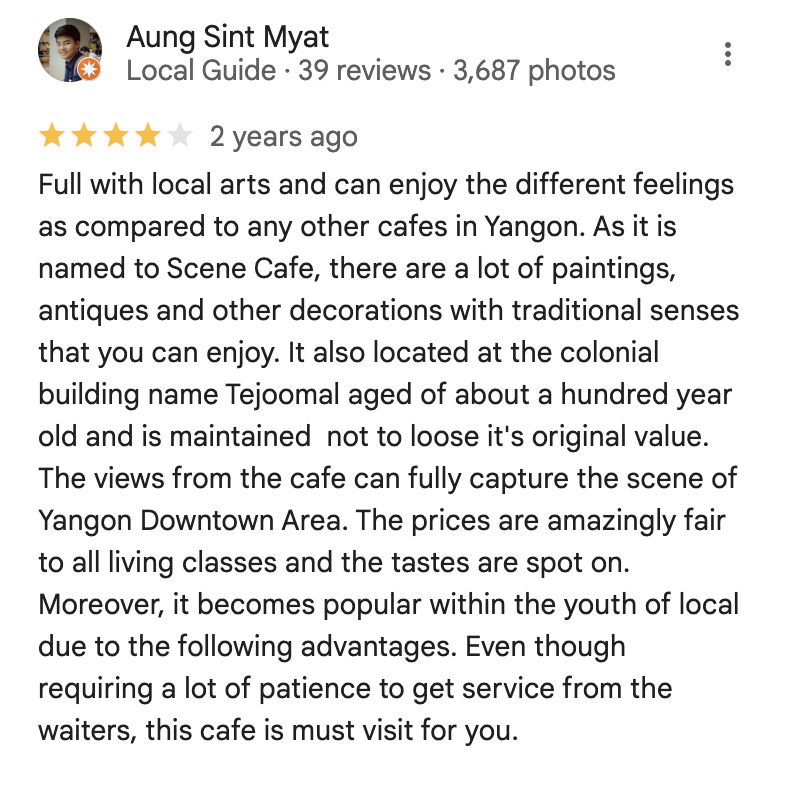
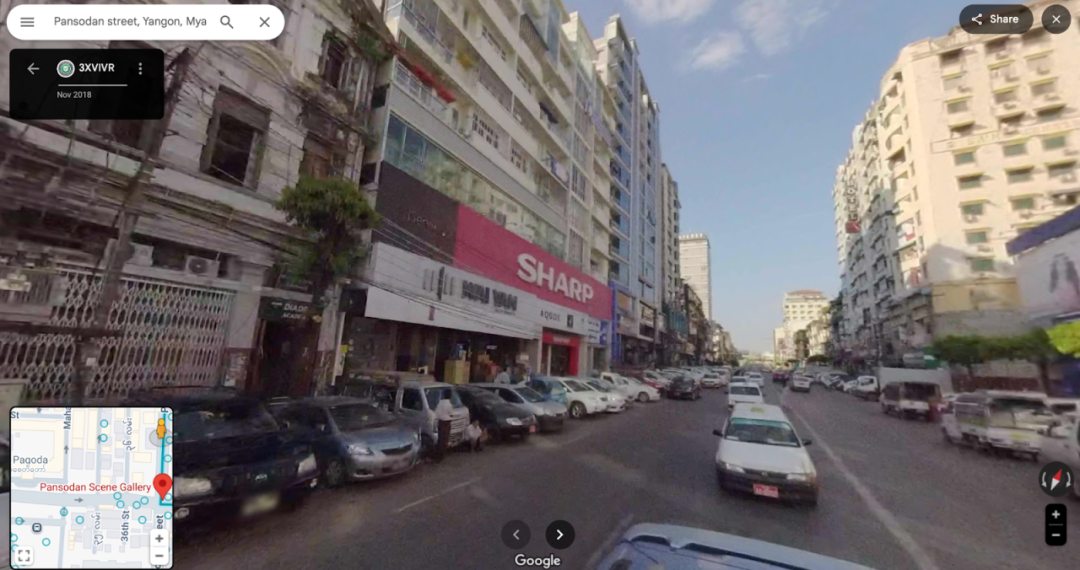
在谷歌地图上搜索Pansodan Scene Gallery,一个本地向导Aung Sint Myat的点评帮我定位到了街景。
这间画廊在潘素丹大街上一栋叫作Tejoomal大楼的殖民建筑内。
The gallery sits on Pansodan Street, between 36th and 37th Streets. In fact, two galleries along this stretch bear the name “Pansodan”: one is Pansodan Art Gallery, the other, Pansodan Scene Gallery. Judging from signage in the wedding photos, it was most likely the latter—Pansodan Scene.
I located Pansodan Scene Gallery on Google Maps, located at the intersection of Pansodan Street and Maha Bandula Road, nestled beside Sule Pagoda. According to GPT, the pagoda marks Yangon’s city zero mile marker—the point from which all roads are measured. In other words, it is not only a spiritual landmark but also a cartographic and political one, woven into the very design of the city’s infrastructure and power. Encircling it are colonial-era buildings, government ministries, courthouses, commercial arcades, and the Independence Monument.
It has served as both a symbolic site and a point of departure for mass mobilizations during key moments in Myanmar’s recent history—including the 1988 democracy movement, the 2007 Saffron Revolution, and the anti-coup protests of 2021.
Just beyond that, to the south, lies the Yangon River.
By searching for Pansodan Scene Gallery on Google Maps, a review from a local guide, Aung Sint Myat, helped me locate the street view.
The gallery is housed in a colonial-era building on Pansodan Road, known as the Tejoomal Building.
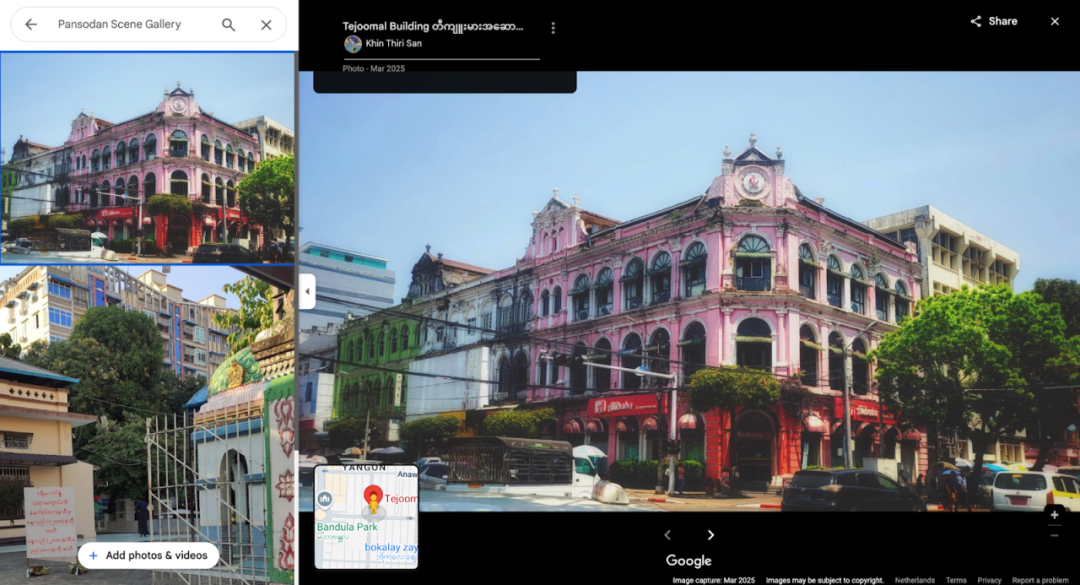
这是2025年3月的谷歌街景,政变已经过去4年。
This is a Google Street View image from March 2025—four years after the coup.
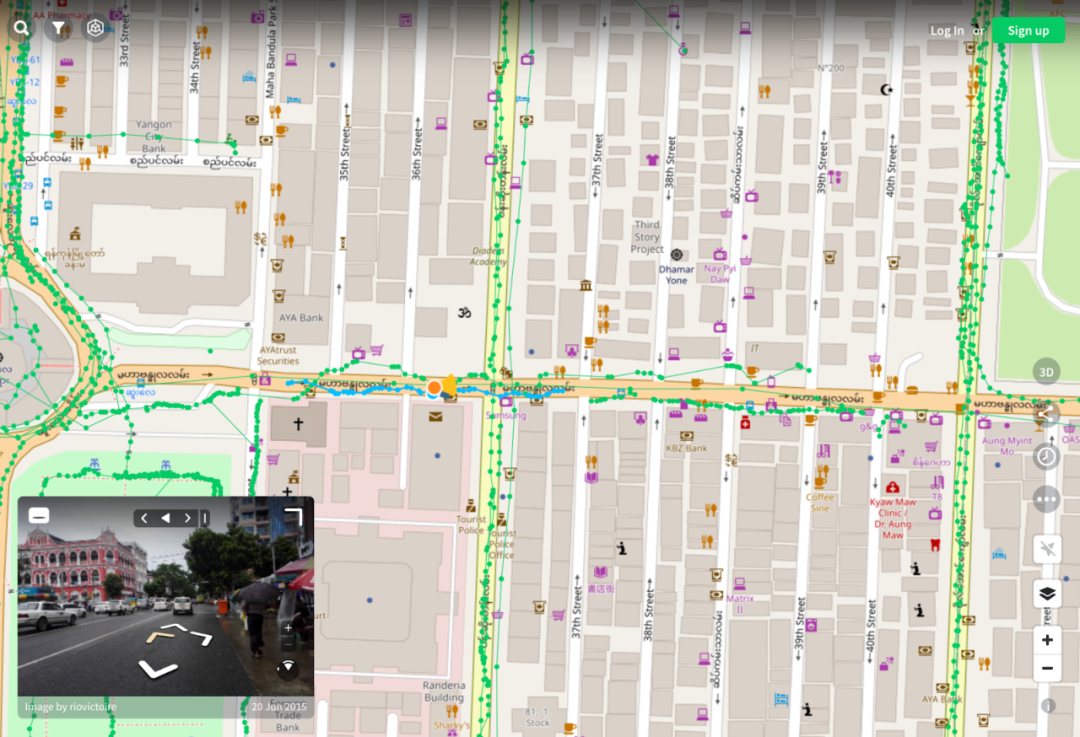
我打开Mapilary,在Pansodan Scene附近找到了距离那场婚礼时间最近的一条街景动线,跟着它闯入了屏幕中的仰光。
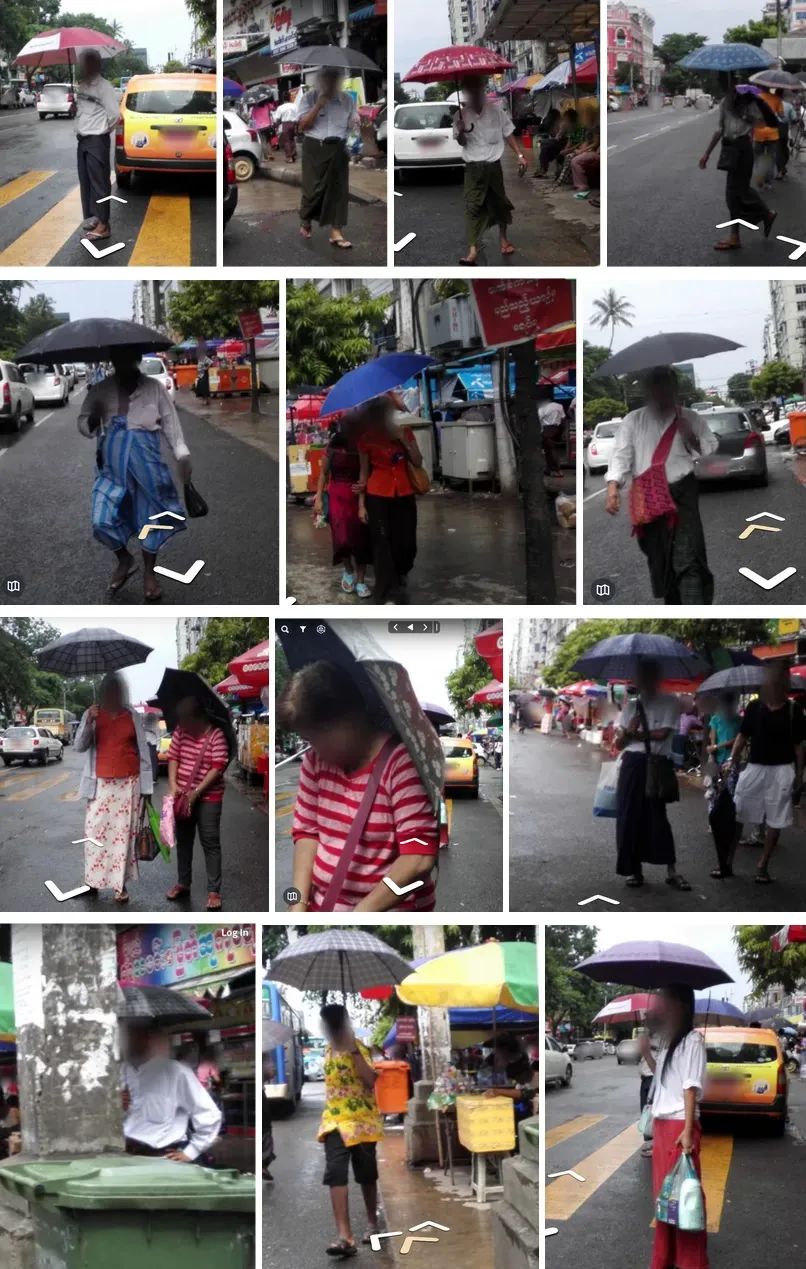
2015年6月20日,阴雨天。婚礼的三个月后。
人们在马哈班杜拉大街上以不同的姿态打着伞——迟钝的、轻佻的、急切的、迟疑的、若有所思的——
以各自的节奏走入历史的沉积层,再通过屏幕的分辨率重新显影,成为一个个坏图像。
I opened Mapillary and found a street-view sequence near Pansodan Scene, captured closest to the time of that wedding—following it, I stepped into a Yangon preserved on screen.
June 20th, 2015. A rainy, overcast day. Three months after the Wedding.
On Maha Bandula Road, people moved beneath umbrellas, each bearing a posture—sluggish, flippant, urgent, hesitant, contemplative—each tracing their own temporal rhythm into the sediment of history. Later, they resurfaced through the compression of resolution, rendered not as subjects but as degraded artifacts: poor images fragmented by circulation, ghosted by loss.
对于“春天革命”的流亡者而言,湄索只是一个中转地,一种中间状态,没有人在这里和泰国发生任何关系。它就像两条国境线之间的那个位置,所有在那里的时光都是悬置着的时间。留在这里的人,凭借“革命即将胜利”的希望,在这座城市不可调和的“临时性”中苦苦等待。
——斑戈《国境之间:“春天革命”与泰缅边境上的缅甸流亡者》
For the exiles of the Spring Revolution, Mae Sot was only a place of transit, a liminal space, where no one had any real contact with Thailand proper. It feels like that spot between borders where time itself is suspended. Those who stayed waited in the irreconcilable temporariness of the town, with the hope that the “revolution will be won soon.”
——Wu Qin “Between Borders: The Spring Revolution and Burmese Exiles on the Thai-Myanmar Border”
Htet是带我来到湄索的人。2023年2月26日,我们从清迈搭8小时的大巴,翻过泰西达府的重重山脉,一路体会着“佐米亚”逃避统治的地形,最终抵达泰缅边境。这只是我离开中国、抵达柏林前走的一条弯路。而他却是被困在这个时间装置中的人。
我感激这条弯路,感激你。在这里,我获得了你的目光,用它们看仰光的街道,被细雨打湿了眼睛。
It was Htet who took me to Mae Sot in the first place. February 26th, 2023. We boarded an eight-hour bus from Chiang Mai, crossing the layered mountain ranges of Tak Province and descending into the Thai-Myanmar borderlands—a journey that unfolded across the rugged terrain of Zomia, long known for sheltering those who flee the reach of the state. For me, it was a detour on the winding path that led me out of China and, eventually, to Berlin. But for him, it is a limbo—somewhere he is trapped in a time installation.
I remain grateful to this detour, to you. It was here I was given the gaze of you— through your eyes, I walked those streets in Yangon, until the fine rain blurred my sight.
禽 Chin 2025.5.12
《Map Writing · 牵挂的经纬》
这是一个从缅甸地图出发的写作专栏,源自《交错带》于春季发起的两场地图写作工作坊。 作品大多游走于真实与虚构之间,采用诗、散文、图片、街景轨迹影像等多种形式。参与者在虚拟街景中寻找那些因地震而刺入心头的图像与词汇,为无法抵达之地赋予感知与意义。 愿我们在遥望中同行。